
CARIFTA Games: Results, Records & Medal Table
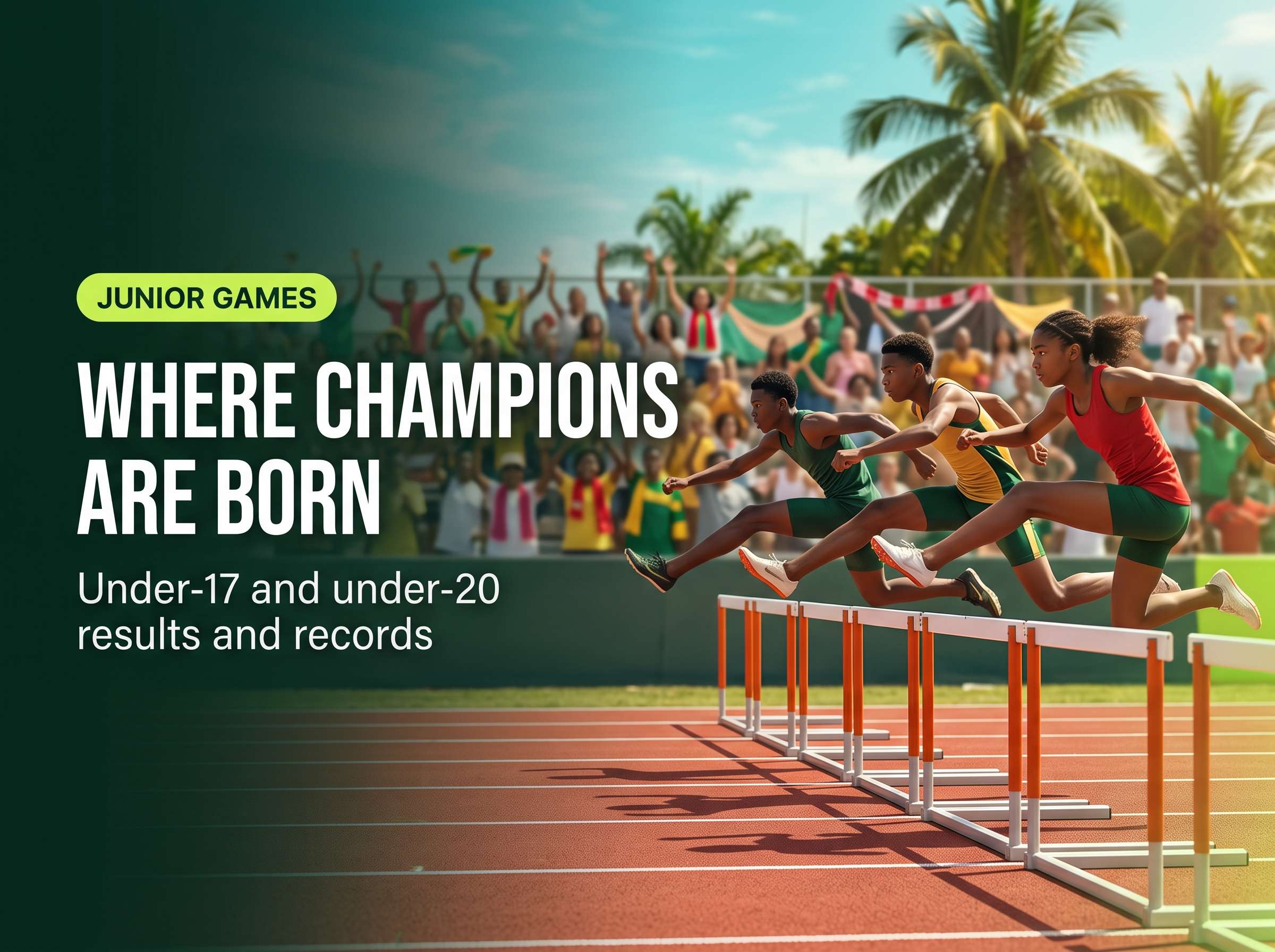
The CARIFTA Games are the Caribbean’s annual under-17 and under-20 athletics championships, first held in 1972. The 2026 edition took place on 4–6 April at the Kirani James Athletic Stadium in St George’s, Grenada, with 27 countries entered. Jamaica led the final medal standings, and Guyana is scheduled to host the 2027 Games on 27–29 March.
2026 medal table
2026 results
Records
Winners by year
CARIFTA Games Key Facts
CARIFTA Games 2026 Medal Table
Final standings for six selected nations; checked 3 October 2026. This is not the complete table of all 27 participating countries.
| Nation | Gold | Silver | Bronze | Total |
|---|---|---|---|---|
| Jamaica | 28 | 27 | 16 | 71 |
| Trinidad and Tobago | 9 | 11 | 15 | 35 |
| Bahamas | 8 | 12 | 10 | 30 |
| Barbados | 6 | 3 | 8 | 17 |
| Guyana | 4 | 1 | 1 | 6 |
| Grenada (host) | 1 | 4 | 6 | 11 |
CARIFTA Games History and Competition Format
CARIFTA Games began in 1972 as a regional athletics competition for young Caribbean athletes. Since then, the championships have expanded to include more participating nations and events, while maintaining their traditional Easter schedule. The competition has also helped develop future Olympic and world champions, including Usain Bolt and Veronica Campbell-Brown.
Barbados
Austin Sealy, who then led Barbados’s amateur athletic association, started the Games in 1972 to mark the Caribbean’s move from the Free Trade Association to the Community. The free trade area had been built to keep the English-speaking Caribbean working together after the West Indies Federation dissolved; the Games took the idea further by inviting the French and Dutch Antilles into an annual junior championship.
U17 · U20 · Easter
The format has barely changed: it runs over three days at Easter, carries more than 150 separate events across sprints, hurdles, middle distance, jumps, throws and relays, and is run under international rules. Countries may enter two athletes per event, up to six in the relays with two as substitutes, and three in the combined events. There are two age groups, under-17 and under-20, the younger of which was an under-18 category until 2017. IAAF president Lamine Diack called the meet “on par with the World Championships”.
Grass tracks to stadia
Early editions used grass tracks and school accommodation. The meet now visits purpose-built stadiums across the Caribbean and draws the attention of American college coaches. NACAC oversees the event as the regional World Athletics confederation. Competition and opportunities for young athletes, rather than older sponsor agreements, have remained central to its appeal.
Bolt · Campbell-Brown
Among the athletes to compete at the Games are Usain Bolt, Veronica Campbell-Brown, Kim Collins, Pauline Davis-Thompson, Alleyne Francique and Obadele Thompson. The Austin Sealy Award has recognised an outstanding athlete at the meet since 1977; Bolt won it in both 2003 and 2004.
CARIFTA Games 2026: Standout Results
Jamaica led the final table with 28 gold medals.
22.11
+1.9 m/s wind; completed the sprint double and anchored Jamaica’s 4 × 100 m relay victory in 43.76
3:05.49
Winning time
20.63
Gold
6,824
Points
5,028
Points; Trinidad and Tobago won both combined events
1.72 m
Personal best
Selected CARIFTA Games Records
These historic marks remain useful reference points alongside the latest results.
| Event | Athlete/country | Mark/year |
|---|---|---|
| U20 girls’ javelin | Sonya Smith / Bermuda | 53.98 m / 1979 |
| U17 boys’ triple jump | Lyndon Sands / Bahamas | 15.03 m / 1980 |
| U17 boys’ long jump | Kareem Streete-Thompson / Cayman Islands | 7.83 m / 1989 |
| U20 girls’ 200 m | Shanoya Douglas / Jamaica | 22.11 s / 2026 |
CARIFTA Games Winners by Year
Leading country by gold medals for each edition; cancelled years are shown for continuity.
| Year | Host | Leading nation | Gold |
|---|---|---|---|
| 2026 | St George’s, Grenada | Jamaica | 28 |
| 2025 | Port of Spain, Trinidad and Tobago | Jamaica | 30 |
| 2024 | St George’s, Grenada | Jamaica | 45 |
| 2023 | Nassau, Bahamas | Jamaica | 40 |
| 2022 | Kingston, Jamaica | Jamaica | 45 |
| 2021 | Not held | — | — |
| 2020 | Not held | — | — |
| 2019 | George Town, Cayman Islands | Jamaica | 36 |
| 2018 | Nassau, Bahamas | Jamaica | 44 |
| 2017 | Willemstad, Curaçao | Jamaica | 39 |
| 2016 | St George’s, Grenada | Jamaica | 42 |
| 2015 | Basseterre, St Kitts and Nevis | Jamaica | 42 |
| 2014 | Fort-de-France, Martinique | Jamaica | 42 |
The Games were not held in 2020 or 2021 because of the pandemic. Following the two-year gap, the event returned to Kingston in 2022.
Jamaican and Caribbean Athletes to Watch
Recent standouts include Jamaica’s Shanoya Douglas and Sanjay Seymore, Trinidad and Tobago’s Tyrique and Tenique Vincent, and Saint Lucia’s Destinee Cenac. Briana Williams won three under-17 titles in 2018 and three under-20 titles in 2019, taking the Austin Sealy Award at both editions before later earning Olympic relay gold.

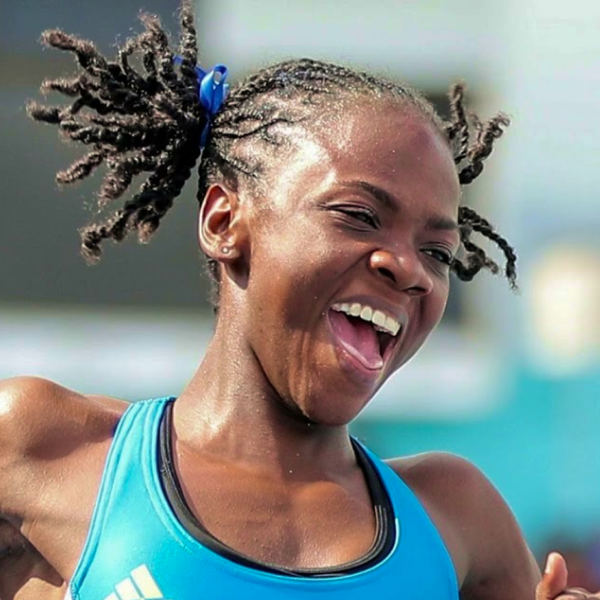

The championships also have long-standing records across the Caribbean. Some of the oldest marks include Bermuda’s Sonya Smith in the javelin and Bahamas athlete Lyndon Sands in the triple jump. The selected record marks below distinguish historical performances from the latest medal standings.
Jamaica holds a large share of the championship records, but smaller delegations have also produced major results. Dominica’s Treneese Hamilton won the under-20 shot put in 2022 with 14.58 m. These performances show the reach of the competition beyond its regular medal-table leaders.
Latest CARIFTA Games News
NACAC
NACAC confirmed Guyana as the 2027 host and Barbados as the 2028 host following discussions involving CARICOM leaders.
Leonora, Guyana
The 2027 edition was scheduled for 27–29 March at the National Track and Field Centre in Leonora, Guyana, marking the country’s first turn as host.